
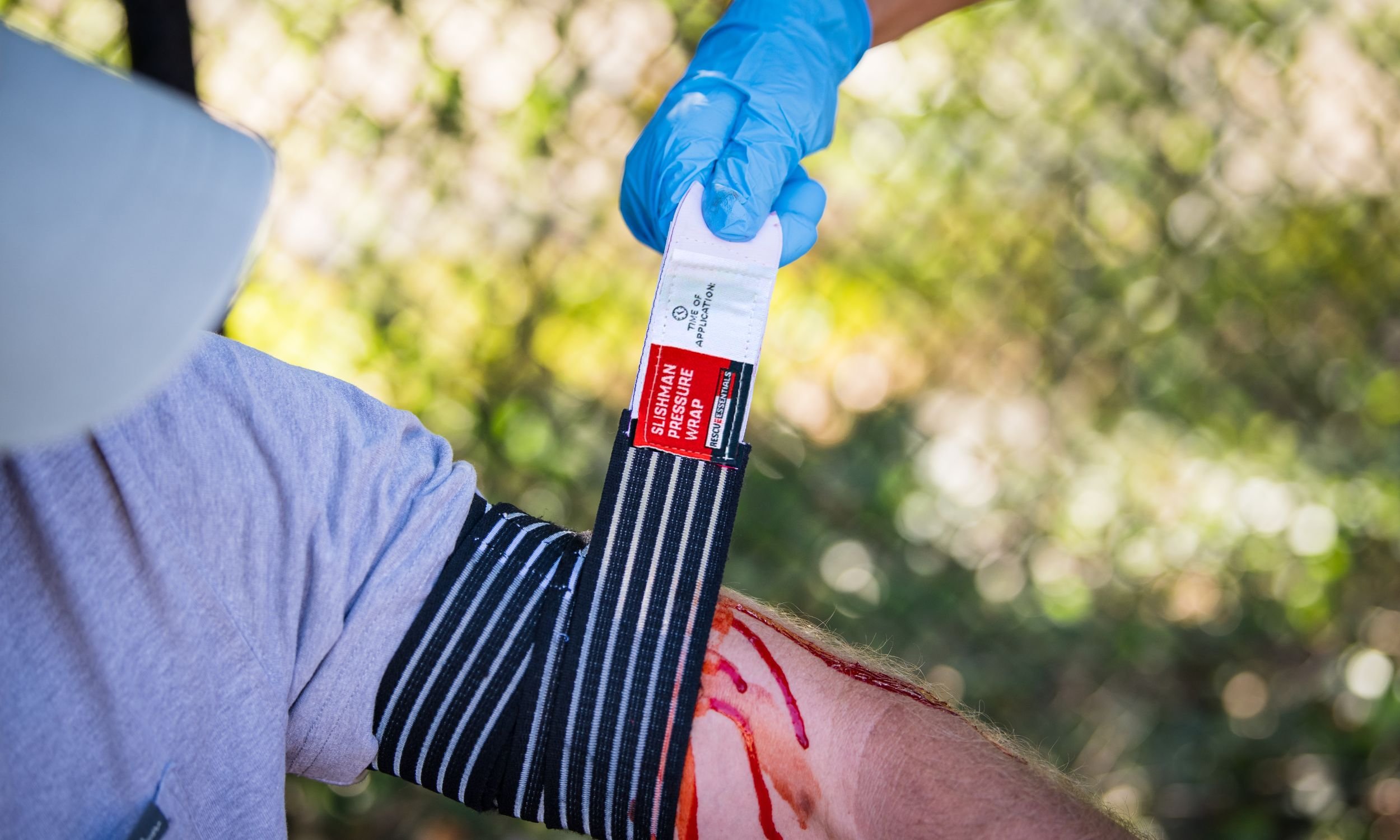
Slishman Pressure Wrap
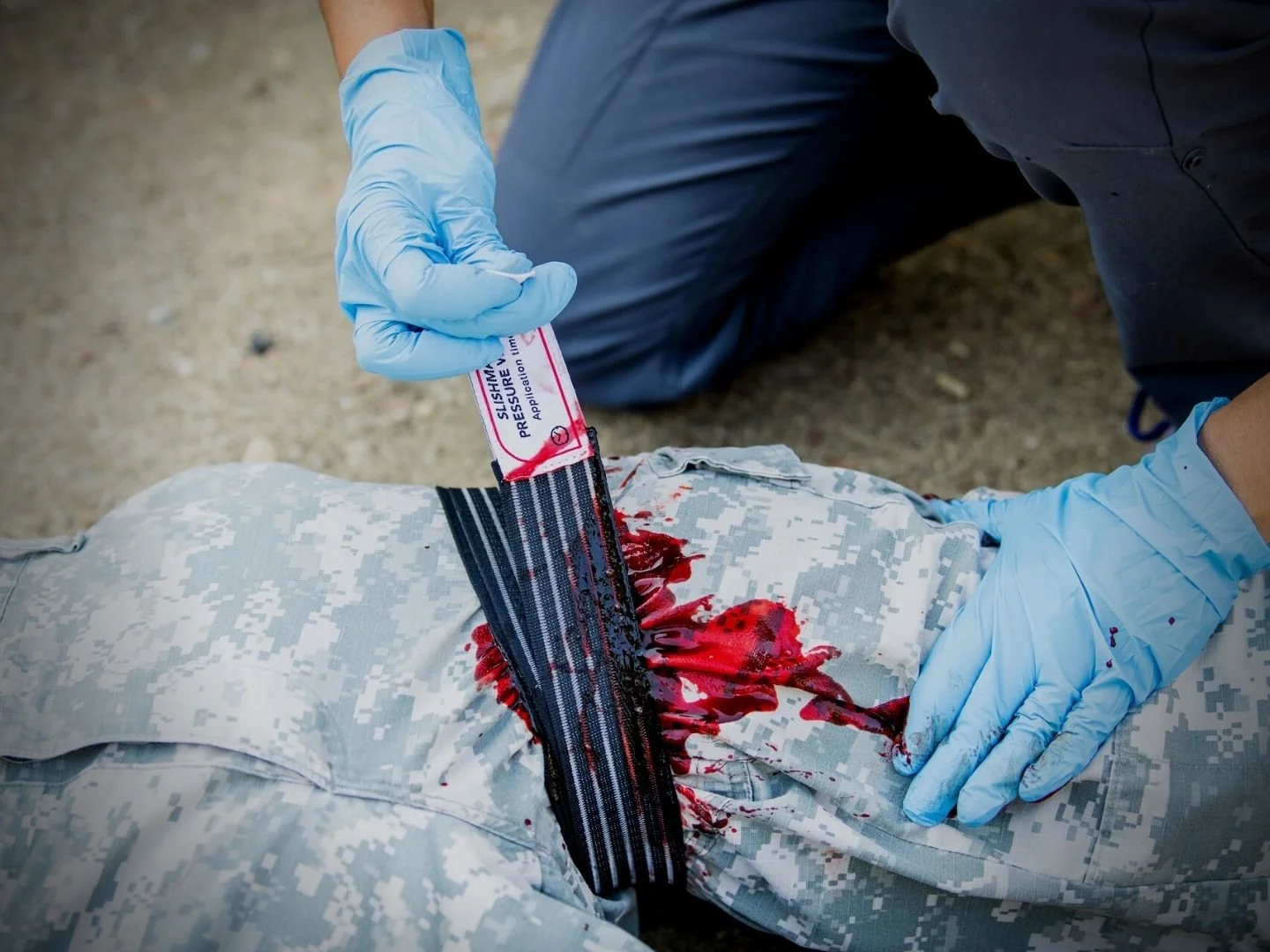
One-handed direct pressure:
Fast, Compact, Intuitive.
More than bleeding control.
More than bleeding control.
A multitool for your EDC
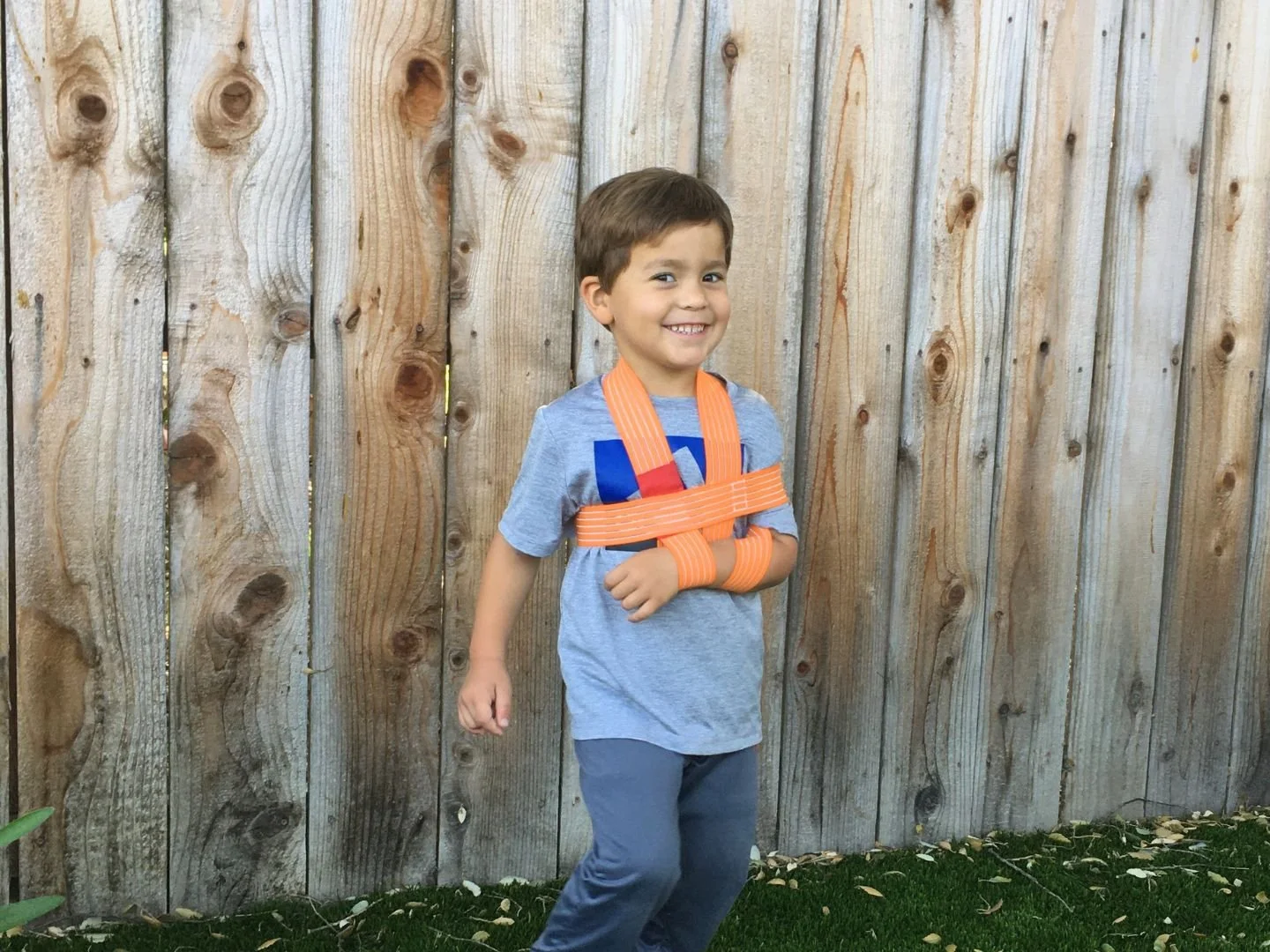
Slishman Pressure Wraps were initially built for bleeding control, but they can be used for many other medical and non medical applications. They’re particularly well suited for kids and K-9s.


Key Features
Easily applied by seasoned medics, first responders, or untrained civilians.
Intuitive
Soft, wide, and finely adjustable means less pain and tissue destruction.
Less Tissue Damage
Good for bleeding, sprains, and contusions. Many non-medical uses as well.
Multi-Use
Works even when wet, soiled, torn (Destruction Tests Video)… or riddled with bullet holes.
Durable
Works well on adults, children, K-9 and other animals.
One size fits all
Light, compact, and flexible. Perfect for pockets, purses and backpacks.
Packable
You’re always your closest
first responder,
so easy self-application is critical.
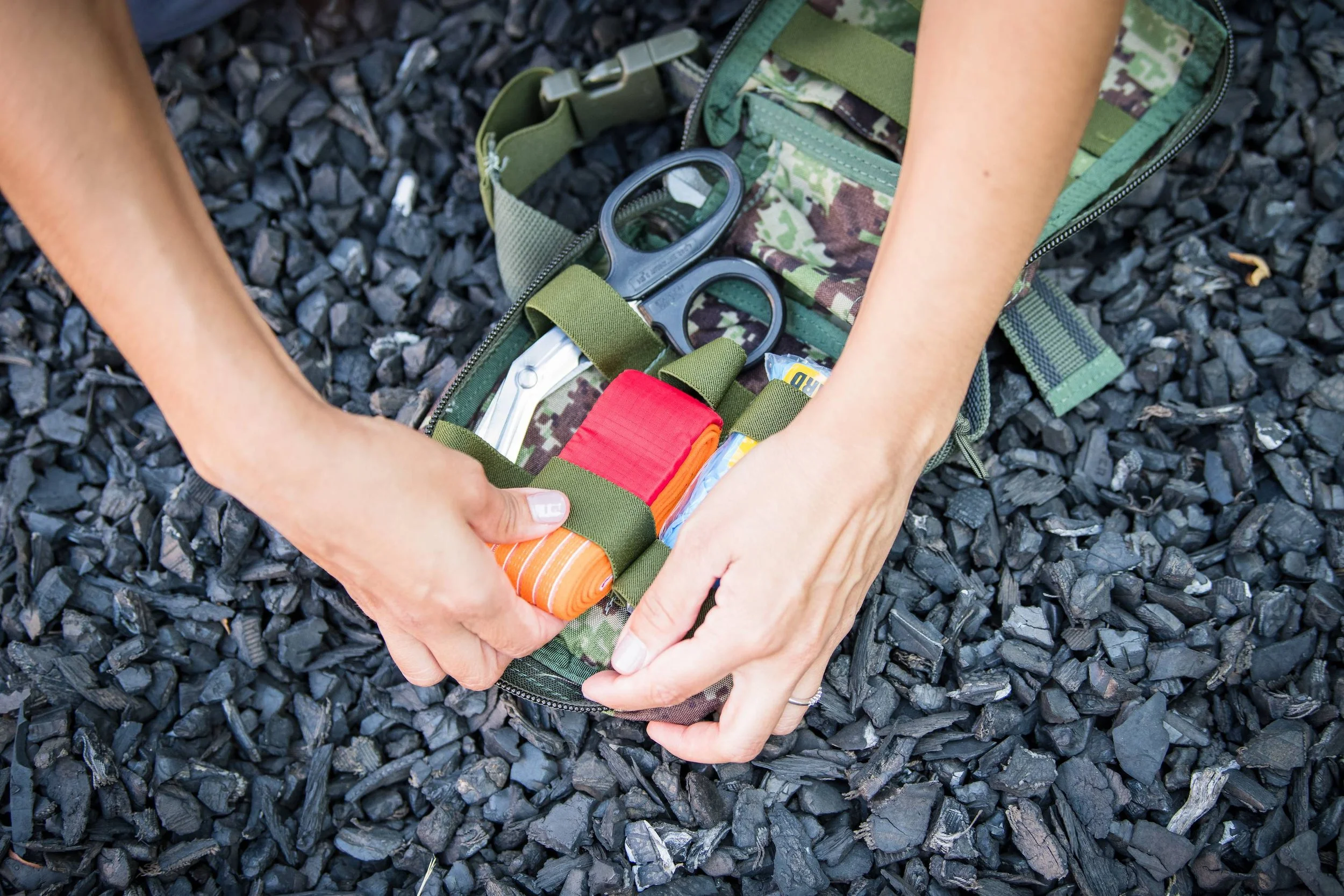
Watch how to re-wrap or stage your SPW:
Slishman Pressure Wraps are distributed in the U.S. and internationally through trusted medical and emergency suppliers. Availability varies by region. Tell us where you’re located and what you need, and we’ll try to match you with an authorized distributor.
*Tritech Forensics, (DBA "Rescue Essentials") manages manufacture and distribution of Slishman Pressure Wraps. A custom labeled grey version of the wraps is sold by Uncharted Supply as well.
Want to purchase?
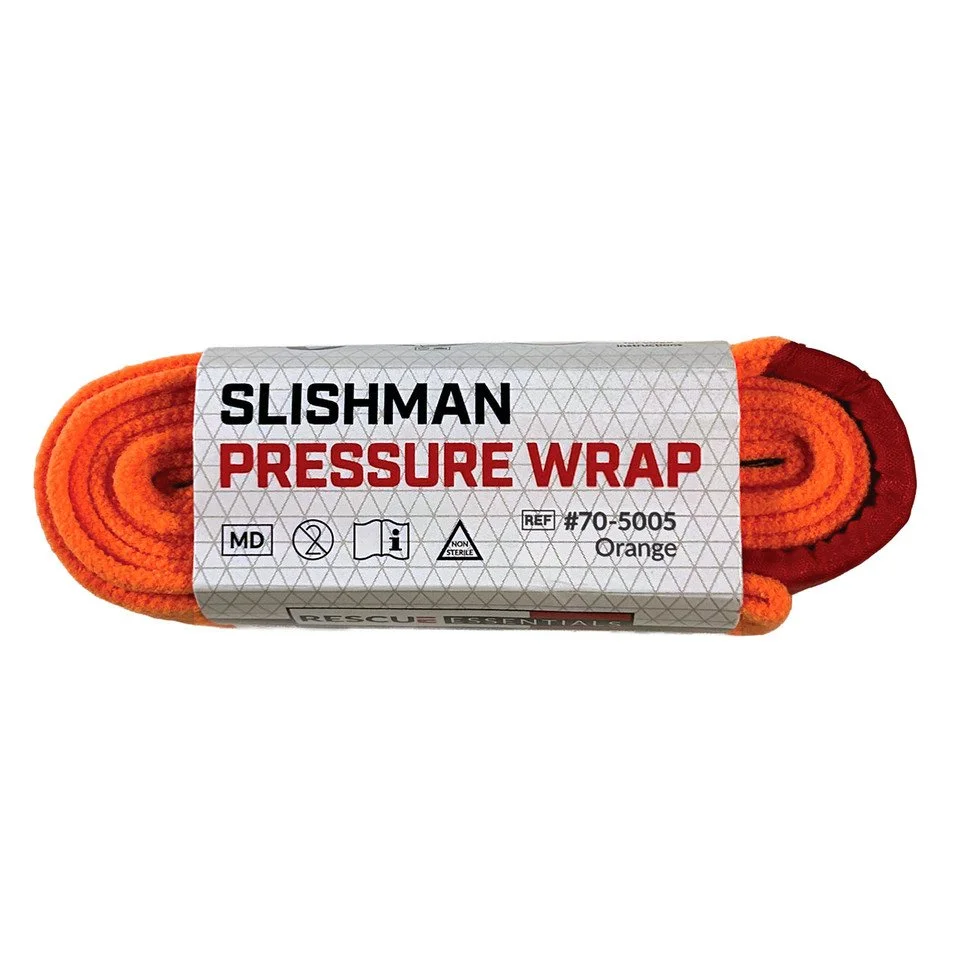
Slishman Pressure
Wrap Pouch
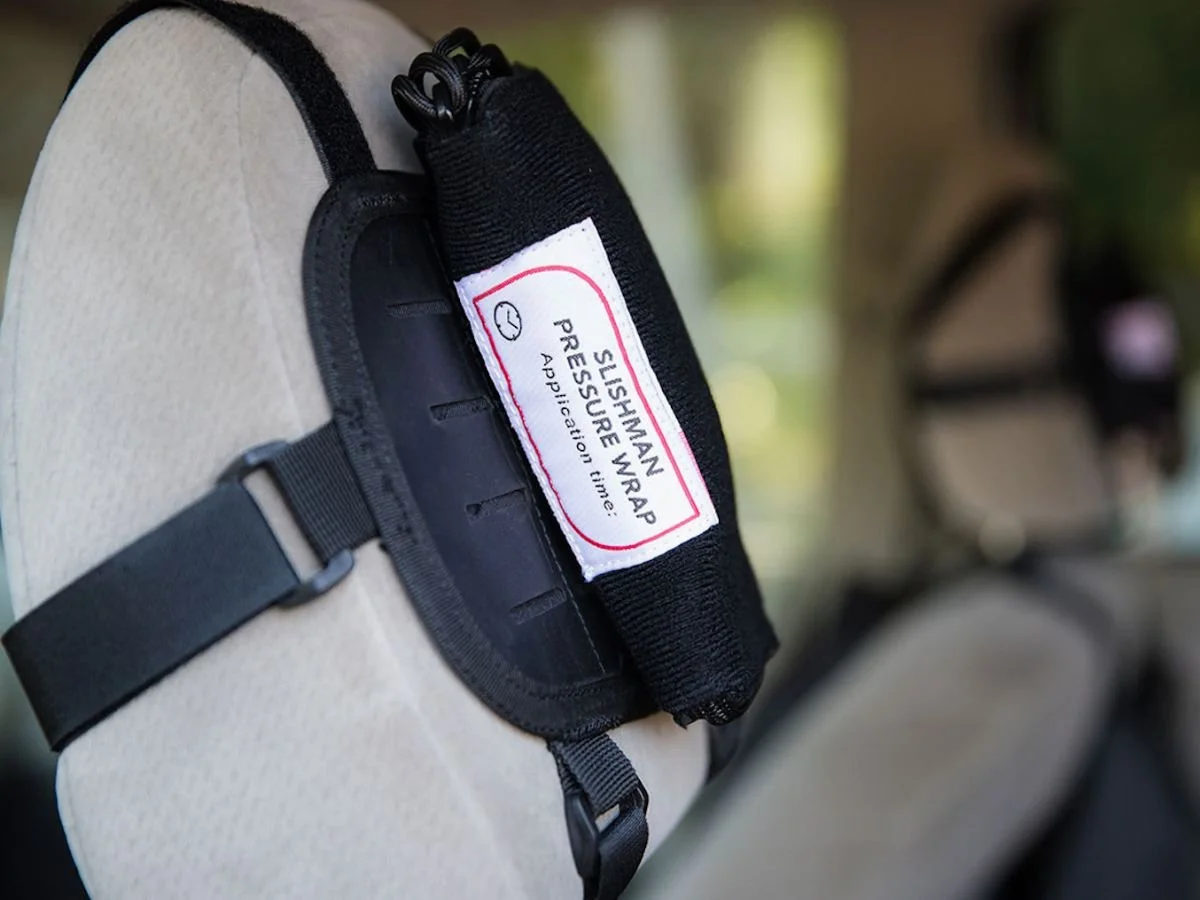
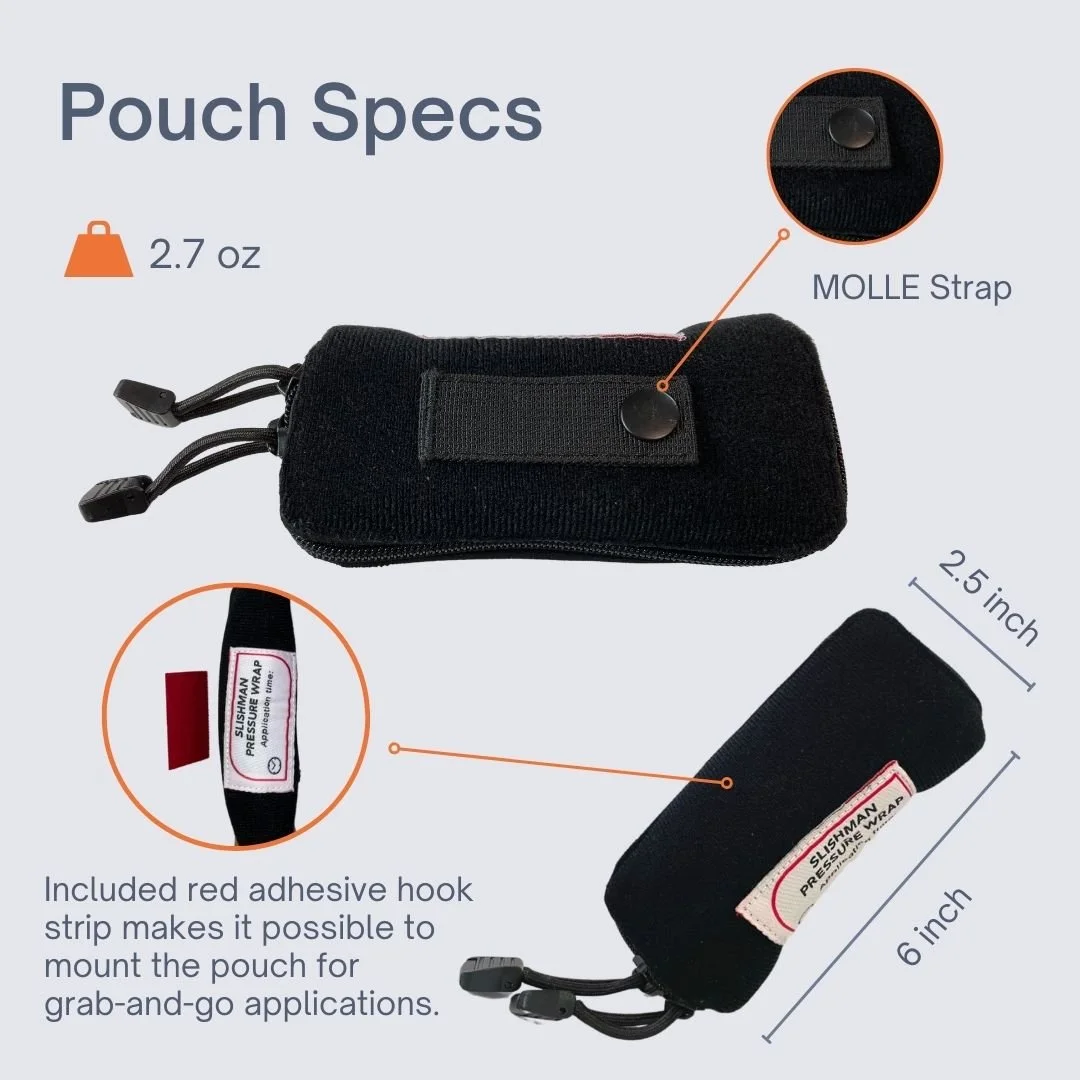
“Don’t underestimate this little feather- weight pouch as it can be a lifesaver! The pouch is extremely practical for carrying essential items related to bleed mitigation. Since every second counts in stopping the bleeding, having basic supplies immediately available is invaluable, and can potentially save a life. My SPW Pouch contains the following and is attached via the MOLLE clip to my everyday carry bag. Yes, it can all fit! 1 Slishman Pressure Wrap, 1 Hemostatic gauze packet, 1 compressed gauze pad, 1 Mini EMT trauma sheers – 4 inches, 1 Mini Sharpie marker, 1 pair Nitrile gloves, 1 mini flathead light, 2 Antibiotics ointment, 1 Hand sanitizer wipe.”
- Loretta K. 07/01/2025
Specifically designed to carry a Slishman Pressure Wrap while allowing space for additional items such as band aids, gauze, medications, gloves, etc.
What People Are Saying
Best IFAK item you
can carry at less than
1 ounce!
Versatility is key with any kit. Dave Canterbury reviews the Slishman Pressure Wrap.
Slishman Pressure wrap Vs. SWAT-T
self application
“The adjustable loop and Velcro make one-handed application a heck of a lot easier.”
Survival Dads: Learn, prepare, survive! Bushcraft, survival, gear reviews, camping and my adventures!
Slishman Torture Test
How many bullet holes can you put through a Slishman Pressure Wrap? Prepared Citizens Training Group chases the answer.
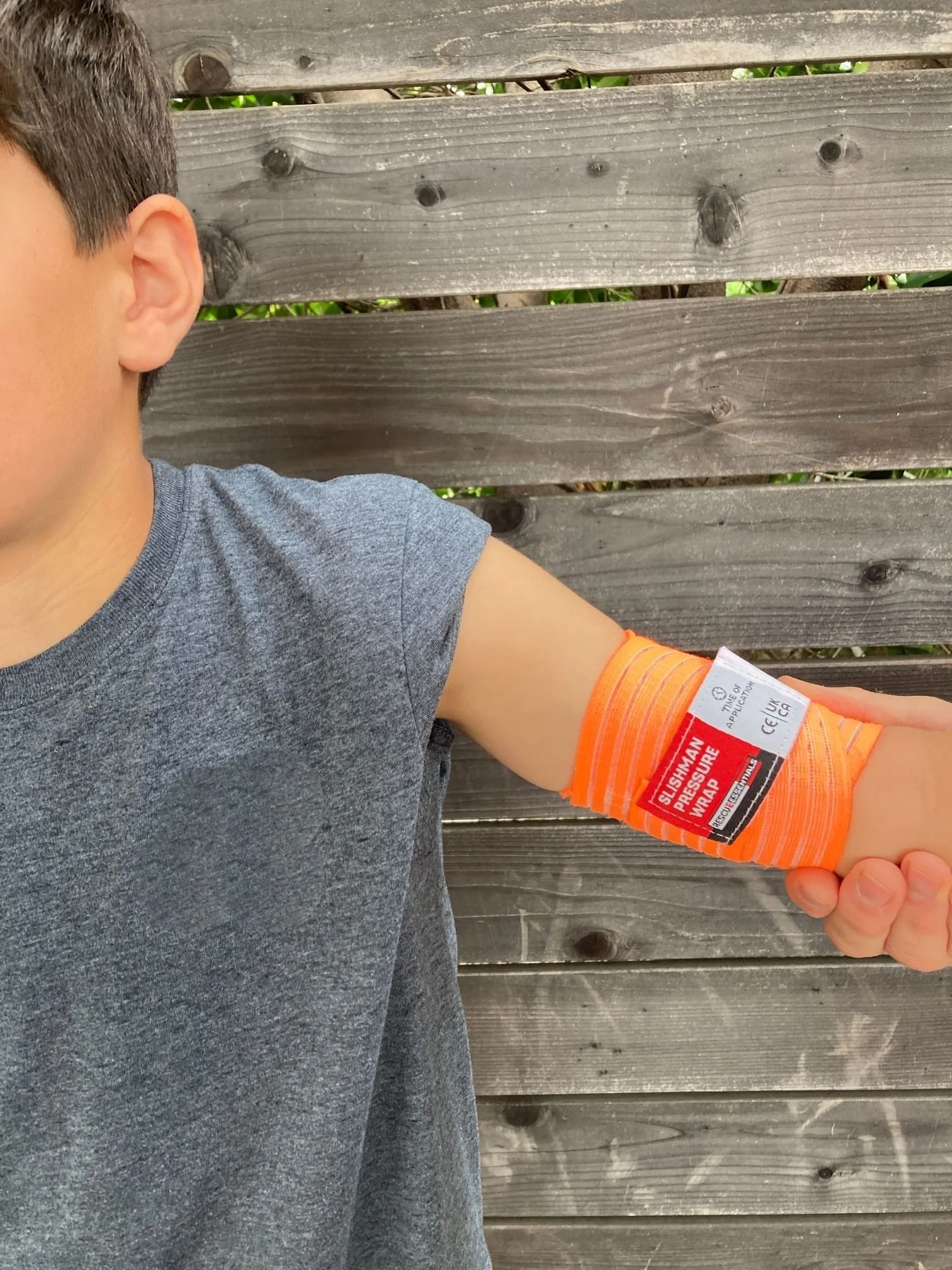
Excellent for small limbs!
Demo application of the Slishman Pressure Wrap on a kid
When seconds count, and
limbs are small.
Real-World Use
“My family and I were at a reunion here in East Texas ... my nephew was the first to scream then the rest of the kids. B*** had cut his upper arm on some barbwire pretty good and deep... We all ran to him and my oldest daughter grabbed my kit from the car and threw me a CAT TQ. I tried to put it on but his arm was too small,
so I told her to grab your wrap and a pack of compression gauze and I proceeded to wrap and pull till most of the bleeding had stopped... He ended up with 17 stitches and the on-call surgeon told my sister that he had only heard of the wraps and was happy to see that it worked and worked well.” - RW 08/04/2025
Dr. Sam’s perspectives on bleeding, bleeding control devices, and the Slishman Pressure Wrap “Why?”
After many wars, and plenty of mass shootings, one of the few silver linings is that we have learned some things about helping injured people to survive. When I started my emergency medicine residency, the ABCs (airway, breathing, circulation) were never questioned. Now we acknowledge that aerating blood free lungs is pointless…
Inventor’s Notes
The story behind the problem, the prototypes, and the design decisions that shaped this product.
In the early 2000s a medic at a trade show handed me a ratcheting tourniquet which resembled a roof rack tie down. It was large and bulky. I remember he said something like… “If you can make an easily cinched, one-handed tourniquet, you can help a lot of people”. So I spent years after than tinkering with different prototypes with hopes for making something easy to cinch, but also less painful with fine adjustability. I wanted something that could be backed off gently, even though gentle tourniquet release isn’t so compelling to me any longer.
I tried pulleys, levers, pneumatics and ratchets. In 2012 I posed the problem to a group of Cal Poly students as well and they did better than anything I tried by using a worm gear. Their design worked well, but making it manufacturable at a reasonable price was the challenge.
After watching more and more tourniquets come to market, the SWAT-T caught my attention in 2014. I liked its simple elegance and multi-utility. Surprisingly, I only learned about Esmark tourniquets a few years later. They’ve been around since the 1800s, but without IP and no Esmark heirs posting things on Instagram, people don’t seem to think much about them. The other challenge is their dimensions are inconsistent. But the one I got on eBay stretches from 9’ to 15’ and hits higher pressures than anything I’ve found.
However, for one-handed application, SWAT-Ts and Esmarks aren’t so easy. So for the next 4-5 years I played with different fabrics. I slowly taught myself FreeCAD to be able to try different cinch mechanisms as well. Eventually, I landed on a fabric that I liked and came up with a metal cinch. Rescue Essentials was kinds enough to have them produced as well. But it was a bust. They were too hard to cinch and confusing too.
In March 2020 an idea came to me to make a cinch with a slip sleeve instead; no metal or plastic needed. Rescue Essentials humored me once again and had a pile of them made. But if you recall, 2020 was a bad year. COVID led those wraps to sit in a container for close to a year.
So I took them over from Rescue Essentials and once they finally arrived, my wife and I became a “medical device company”. We got input from preppers and other people I affectionately call “tournikooks”. We made videos and found distributors and people gradually seemed to take interest.
Then in 2023 I ran an experiment that changed my take on tourniquets. Up until that experiment I was told that I need to get the wraps tested. But I slowly learned that there just isn’t a standard tourniquet test. There isn’t a standard limb, nor a standard blood pressure, nor a standard rescuer. Some people pointed to a 2019 review by the Committee on Tactical Combat Casualty Care. But that review is a meta analysis. CoTCCC isn’t lab.
So in a bit of desperation I place an arterial line and an IV into my left arm and set up two pressure columns. I thought at the very least, this would show that my wraps could clearly stop flow in my arm. I thought it would help to clarify what is meant by “venous tourniquet” as well. What I learned was far more than what I expected. This experiment made it clear to me that there really is no grey zone when using a tourniquet. You either stop flow entirely, or your cause harm. Falling short of arterial occlusion just leads to a ballooning bloody limb. The experiment also showed me that arterial an venous pressures equilibrate after arterial occlusion. And when occlusion is lost, it’s quite painful as blood returns.
I now separate tourniquet pain into five categories:
Superficial injury, such as skin pinch or hair tugging
Deep tissue injury, which is worse using narrow bands
Ischemia, which amplifies over time
Venous engorgement
Fear …. because saying “it’s a tourniquet and it will hurt, but it will save your life”… is an amplifier.
So if you apply a tourniquet and if you patient seems to have an acute increase in pain en route to the hospital consider lost occlusion.
Another experiment shifted my take on tourniquets yet again. Fourteen times I squeezed a bag of water with seven elastic tourniquets an seven inelastic tourniquets. For each of trials I drove the pressures to some set numbers and then removed water in 20 mL increments up to 60mL. In short all the elastic tourniquets maintained pressure better than all the inelastics. So because of this test I’m an advocate for elastic.
But back to Slishman Pressure Wraps, time has really changed me quite a bit. I no longer want to make the best tourniquet on the market. The wraps rarely see bleeding. They get used far more to support sprains and fractures and to hold ice packs and pressure against bumps and bruises. They have far more non medical uses as well.
In terms of bleeding control, I they really excel for kids and K9s in particular, largely because small limbs really don’t need much. 120mmHg is only 2.3 PSI. So blood pressure isn’t the challenge. It’s the surrounding meat. Whatever it’s worth SPWs will stop flow in my 60cm leg. But for larger legs you may need two.
In any case, I think SPWs really are best for untrained civilians for whom “direct pressure” should be their main lesson. It’s easy to cause harm with tourniquets. It’s far more difficult to amplify blood loss and harm with direct pressure first approach.
In 2025 Rescue Essentials was kind enough to take over the wraps once again, which has been a giant weight lifted. I’m far happier tinkering than selling.