
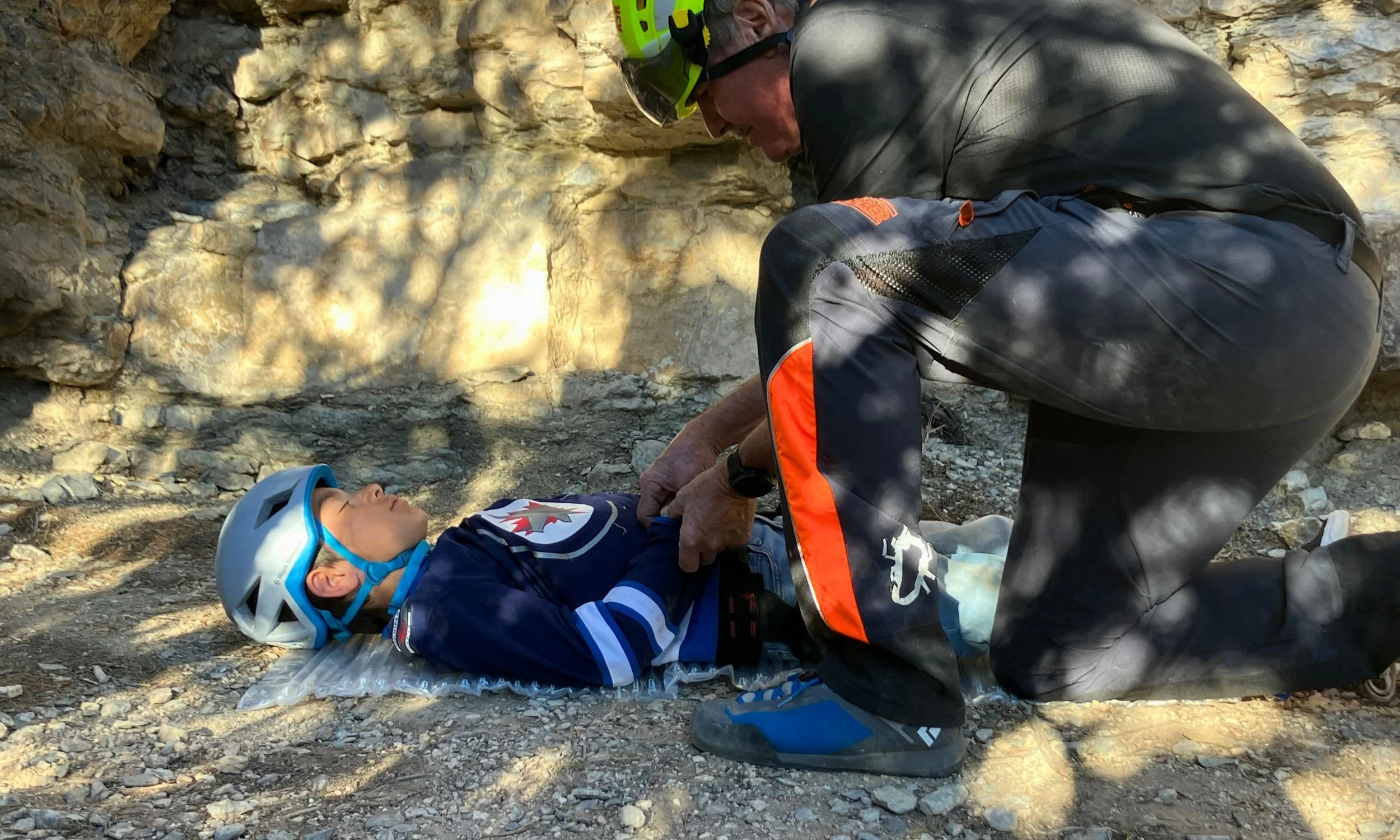
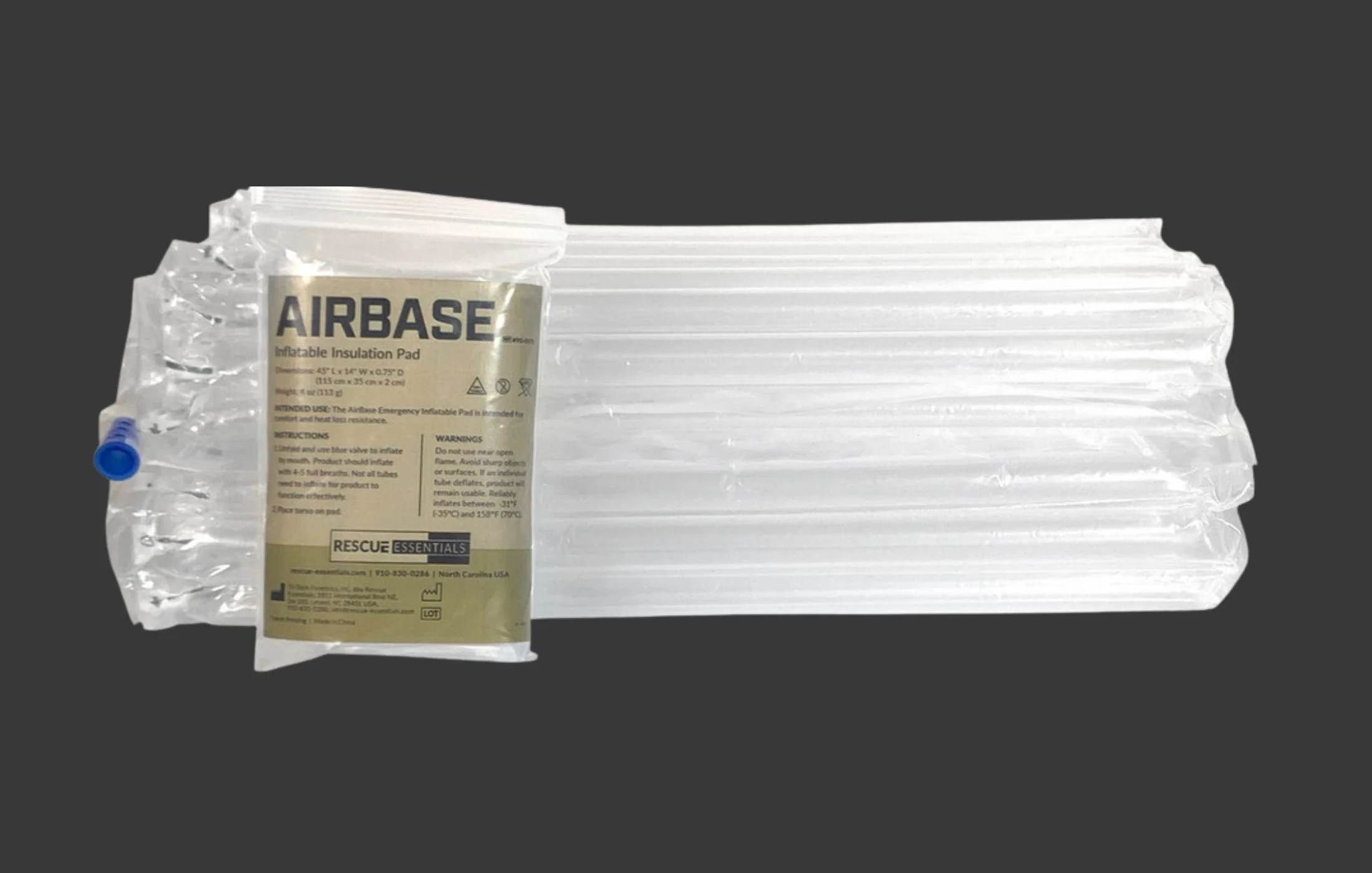
AirBase Inflatable Insulation Pad
A comfort multi-tool
Protection in your pocket
Whether protecting someone lying on the ground or creating a more comfortable staging area, the AirBase® pad delivers dependable performance when it matters most. It inflates in a few breaths, no pump required.
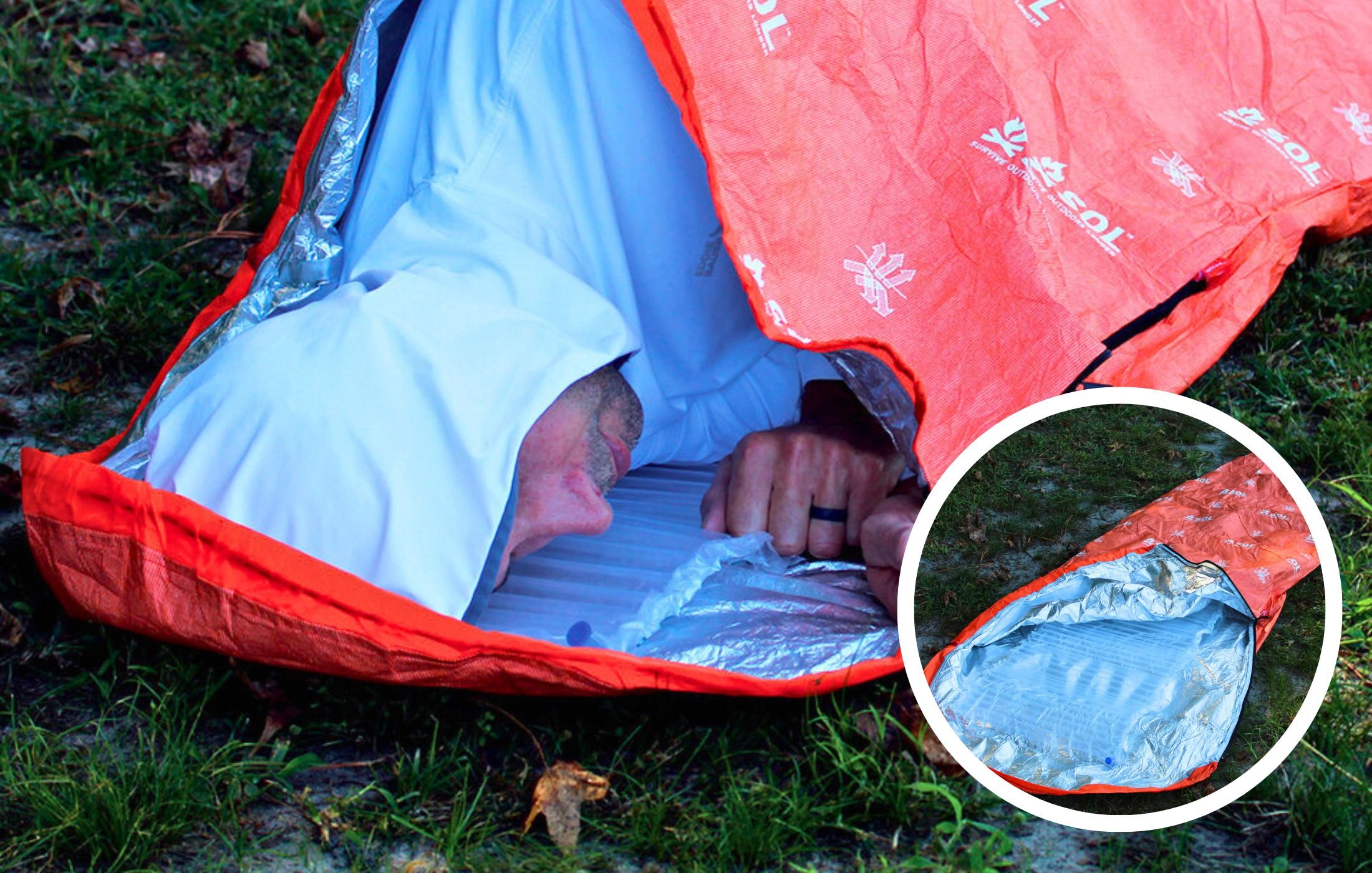
Pairs well with Emergency Bivvy, sleeping bag or blankets
AirBase® deploys fast to reduce conductive heat loss and keep you more comfortable.
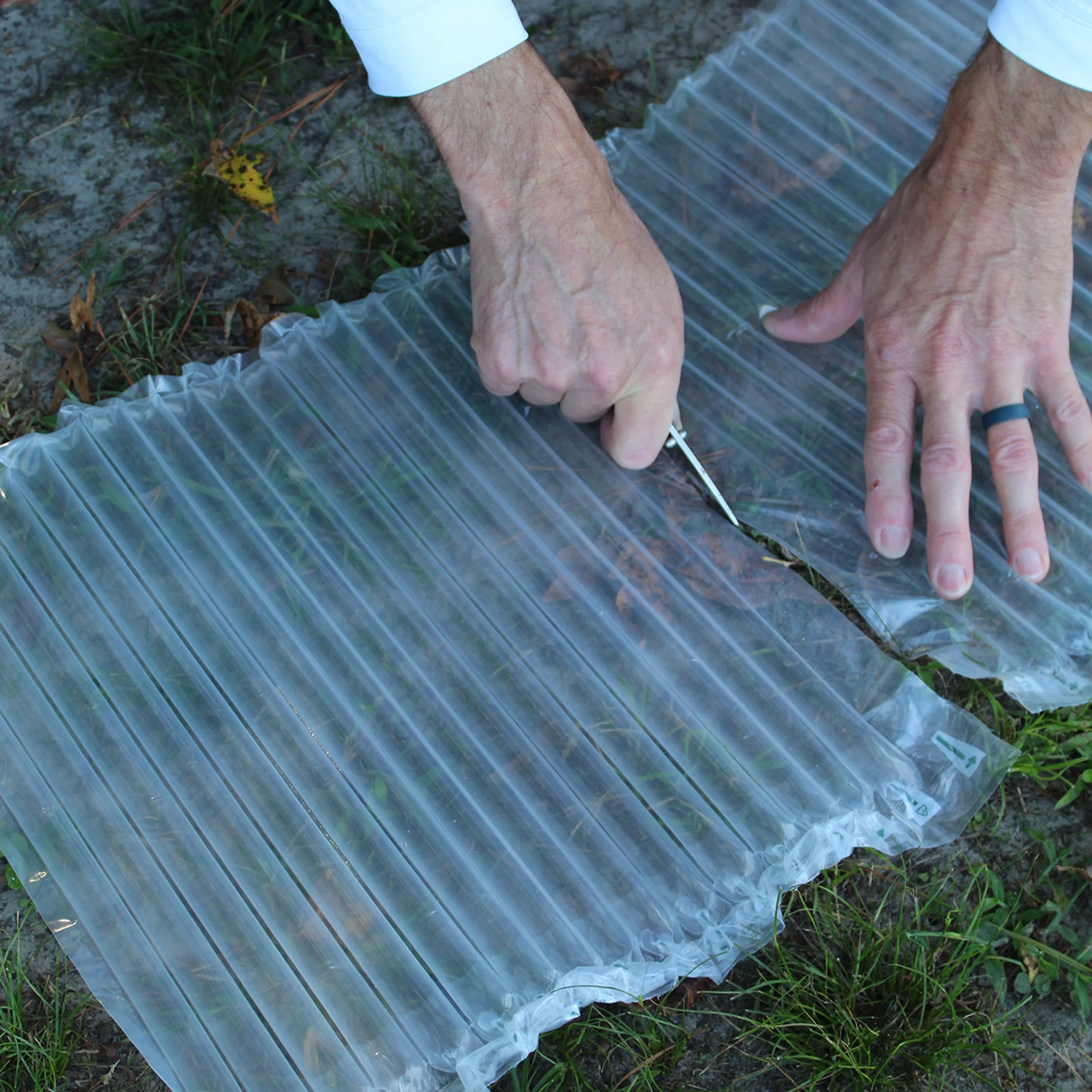
Independently sealed air chambers ensure that even if one section is punctured, the rest of the pad remains functional, maintaining support and insulation. Its deflation-resistant column structure enhances durability.
Engineered with First
Responders in mind
The AirBase® Inflatable Insulation Pad offers rapid deployment, reliable insulation and unmatched portability in critical situations. Its ultra-lightweight, compact design makes it easy to stow in emergency kits or response vehicles without adding bulk. Aebhric O'Kelly showed me and Phil Carey his prototype at SOMA in 2024, and from there we were off to the races.
When seconds count, Airbase® inflates in just a few breaths.
Dimensions (Packaged):
4" H x 6" W x 1" D
Dimensions (Inflated):
45.25" H x 13.75" W x 0.75" D (115 cm x 35 cm x 2 cm)Weight 3.1 oz (88 g)
R-Value 1.25
Maximum Weight 325 lbs
Independently sealed air chambers ensure that even if one section is punctured, the rest of the pad remains functional, maintaining support and insulation.
What People Are Saying
Patient comfort while reducing risk of pressure sores.
Product is compact and light. It’s easy to carry and set up. Adding to patient comfort while reducing risk of pressure sores and issues associated with being on a litter for long periods of time.
— Rick C. 10/27/2025The coolest and most useful thing I’ve seen in a long time!
It weighs a little more that 3oz and the applications for it are astounding… Pad to get an injured party insulated from the ground, Improvised Splint, Bivy pad, Sit pad. All in a package that can fit into virtually any kind of response pack or hiking pack!
— Jon P. 09/03/2025Would recommend!
Great compact and light inflatable air mattress. I would recommend having in your go-bag as a backup.
— John R. 08 /07/2025Tell us about your experience with the Airbase®
Real-world use cases improve education and adoption.
Want to purchase?
AirBases are distributed in the U.S. and internationally. Availability varies by region—tell us where you’re located and what you need, and we’ll match you with a nearby authorized distributor.
Review
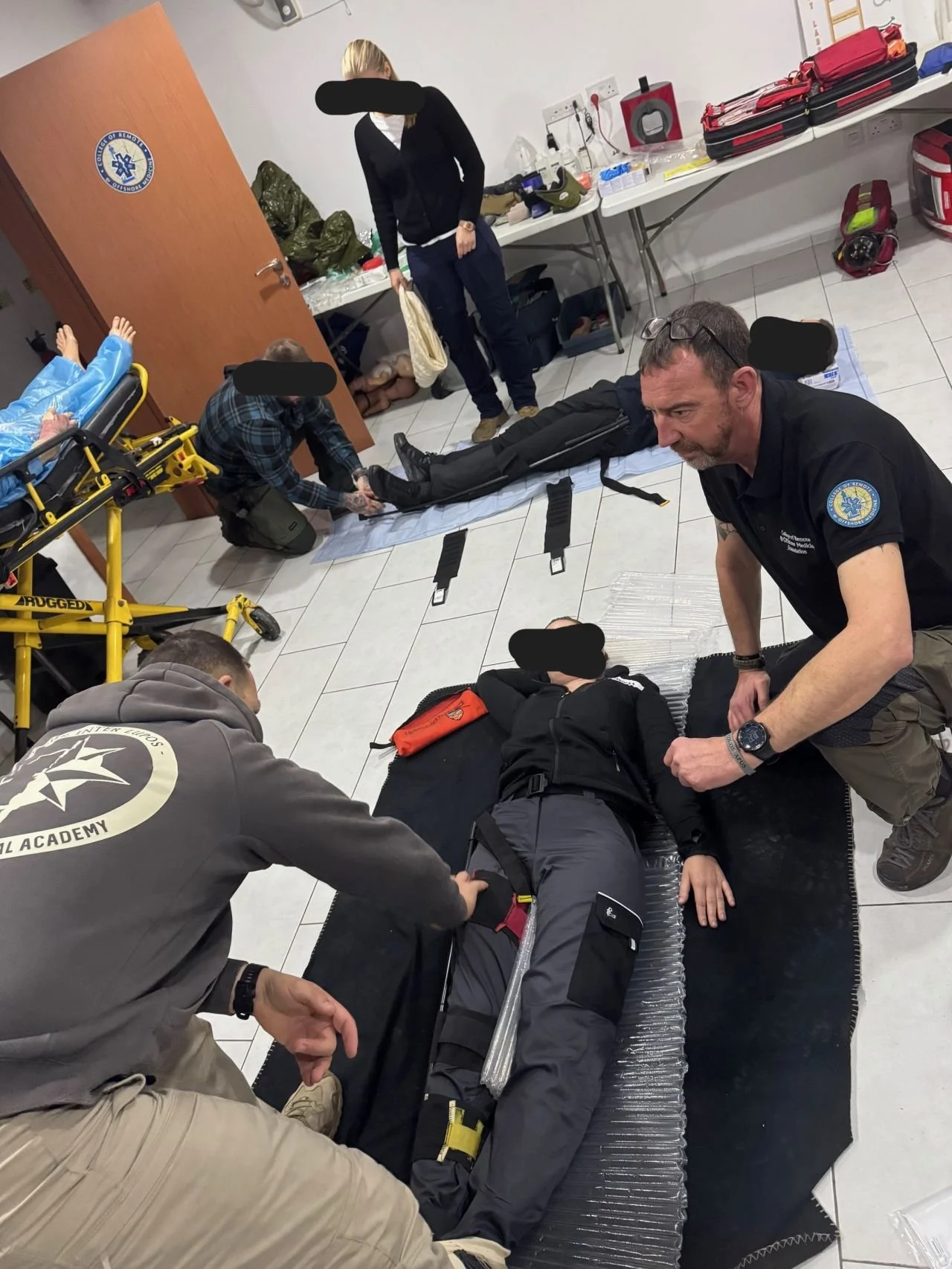
I have recently spent some time testing out the AirBase (from Rescue Essentials), designed & developed by Aebhric OKelly and Samuel Slishman, in a variety of real-world settings, including some classroom work with students in the College of Remote and Offshore Medicine Foundation Award in Remote Emergency Technician course. The AirBase continues to impress me.
In emergency situations, the AirBase moves from pocket-sized to ready to go in just a few breaths. There is no pump, no fuss, just protection from whatever unforgiving surface you are working on. The independently sealed air chambers ensure that should something go wrong with one of them, the others will continue to work, insulating, stabilizing, and keeping the patient comfortable in the midst of chaos.
The deflation-resistant column structure provides a level of durability that is rare in something this small, and its ability to work with bivvies, hypothermia wraps, and blankets makes it a highly versatile piece of equipment for remote, austere, and prehospital situations. I should note that the AirBase works on a single inflation, meaning that once deployed, it will stay deployed until punctured.
During medical teaching lessons/scenarios, I have found it to be a standout. The students can see its value and appreciate its simplicity, allowing them to focus on the patient, not the equipment. In the field, it finds its way into the pack as a worthy member of the group, light, compact, and ready to go at a moment’s notice without adding bulk to already overloaded equipment.
I would like to take a moment to thank Sam Franklin at Reflex Medical for originally sending me several AirBase’s to field test & provide feedback- cheers (as always!) Sam!
Inventor’s Notes
The story behind the problem, the prototypes, and the design decisions that shaped this product.
In 2024 at the Special Operations Medical Association (SOMA) trade show a friend named Aebhric O’Kelly showed me a prototype. He had a straw and some packing material which he was able to inflate orally. He wanted to use it to help prevent hypothermia. My friend Phil Carey and I saw his demo and were immediately impressed. So we worked to turn Aebhric’s prototype into another Rescue Essentials product. My role after that was largely R+D. I helped to optimize the material, the dimensions, an inlet valve and to find a source. I filed the IP and now I help with the marketing.
However, after a couple years thinking about this product, it’s become clear to me that patient comfort is the main goal rather than hypothermia prevention.
Like Slishman Pressure Wraps, which rarely see bleeding, most Airbases won’t be used to ward off hypothermia. They’ll be used more for padded seating at sporting events, or for disaster victims to get a bit of rest, or to help stranded passengers at airports. On hot sand or asphalt they can help ward off hyperthermia too. They pair well with Slishman Pressure Wraps for splinting and I hope they’ll land between patients and hard backboards eventually as well.
Airbases aren’t meant to compete with Thermarests, yoga mats, and more comprehensive hypothermia management systems. But considering their size, weight, cost and multi utility, I think they can really help a lot of people.