
Hare Traction Splint: 14 Reasons to Switch
As EMS providers and firefighters, you know how critical rapid, reliable femur fracture traction splinting is in the field. A femur fracture can cause excruciating pain, significant blood loss, and instability during extrication, ambulance transport, or helicopter operations. For decades the Hare traction splint has been the go-to EMS traction splint, but technology has advanced.
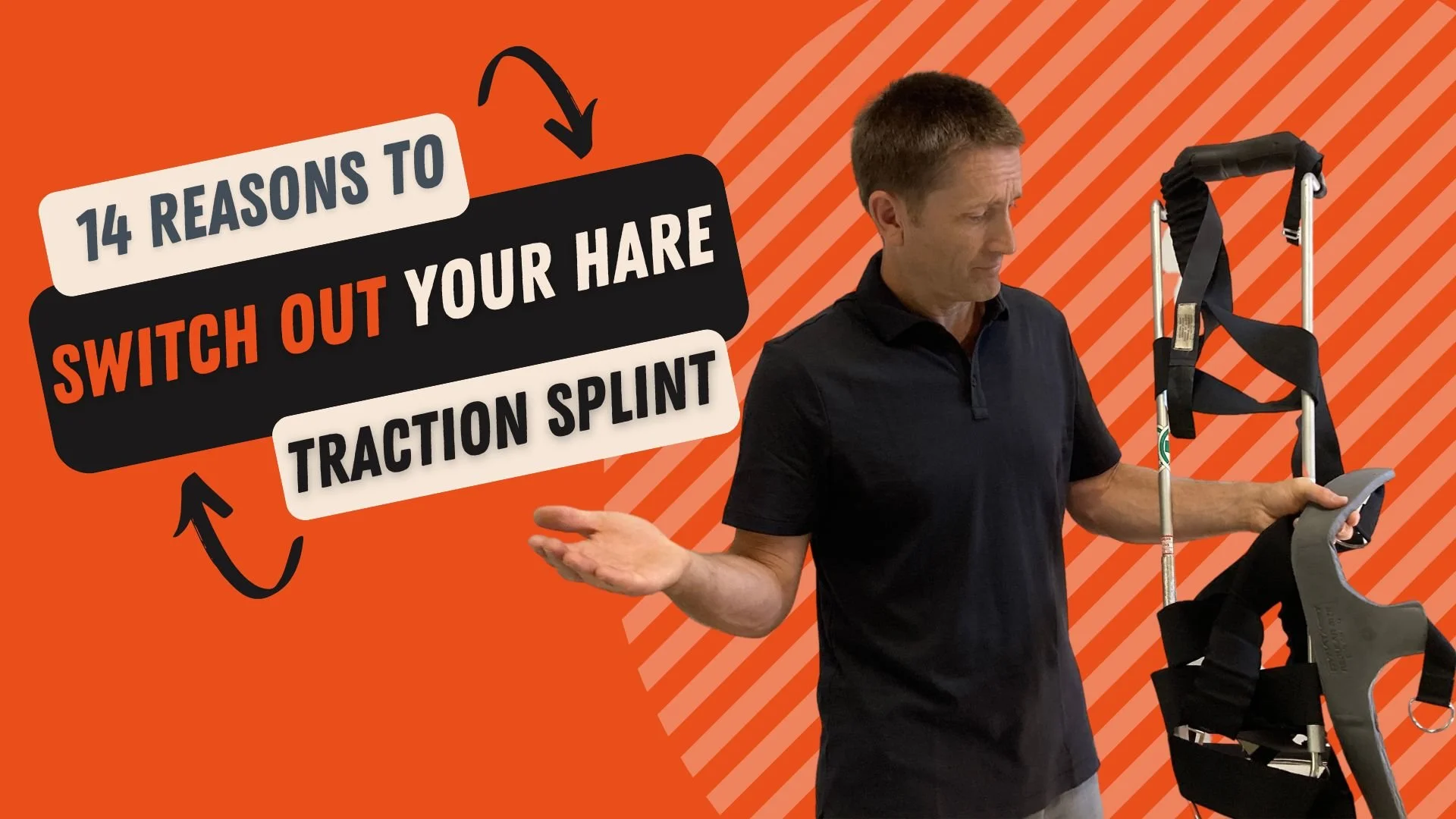
In the 2022 video below I demonstrated the Slishman Traction Splint Compact
(STS-C) side-by-side with the Hare. Since then we’ve released the STS Gen 2 (2023), building on the original STS and STS-C models. The core advantages remain the same, and independent testing continues to prove them.
A 2014 study in the Journal of Special Operations Medicine evaluated four NATO-approved traction splints for battlefield use (CT-6, Kendrick, REEL Splint, and STS). The conclusion was clear: “The STS had the best objective performance during testing and the highest subjective evaluation by participants.”
Modern Femur Fracture Management
Here are the 14 practical reasons every EMS provider, firefighter, and flight crew should retire the Hare traction splint and move to the Slishman Traction Splint family (STS Gen2 or STS-C) for modern femur fracture traction splinting.
1. Ultra-Compact Design
The Slishman Traction Splint fits in any jump bag, backpack, or ambulance cabinet. No more dedicating an entire compartment to a long rigid pole.
2. Light Weight
Under one pound — versus 5+ pounds for most Hare or Sager-style devices. Critical for wildland firefighters, tactical teams, and long carries.
3. No Extension Past the Foot
The compact design of the STS-C and STS Gen2 won't jam up against ambulance doors or prevent you from placing patients into aircraft. When extricating or hoisting the splint stays safely contained within the board, litter or basket. No risk of striking the splint resulting in further injury or pain to the patient.
4. Single-Provider Application
Apply in under 60 seconds — often solo. No second rescuer needed for manual traction, even in backcountry or mass-casualty incidents.
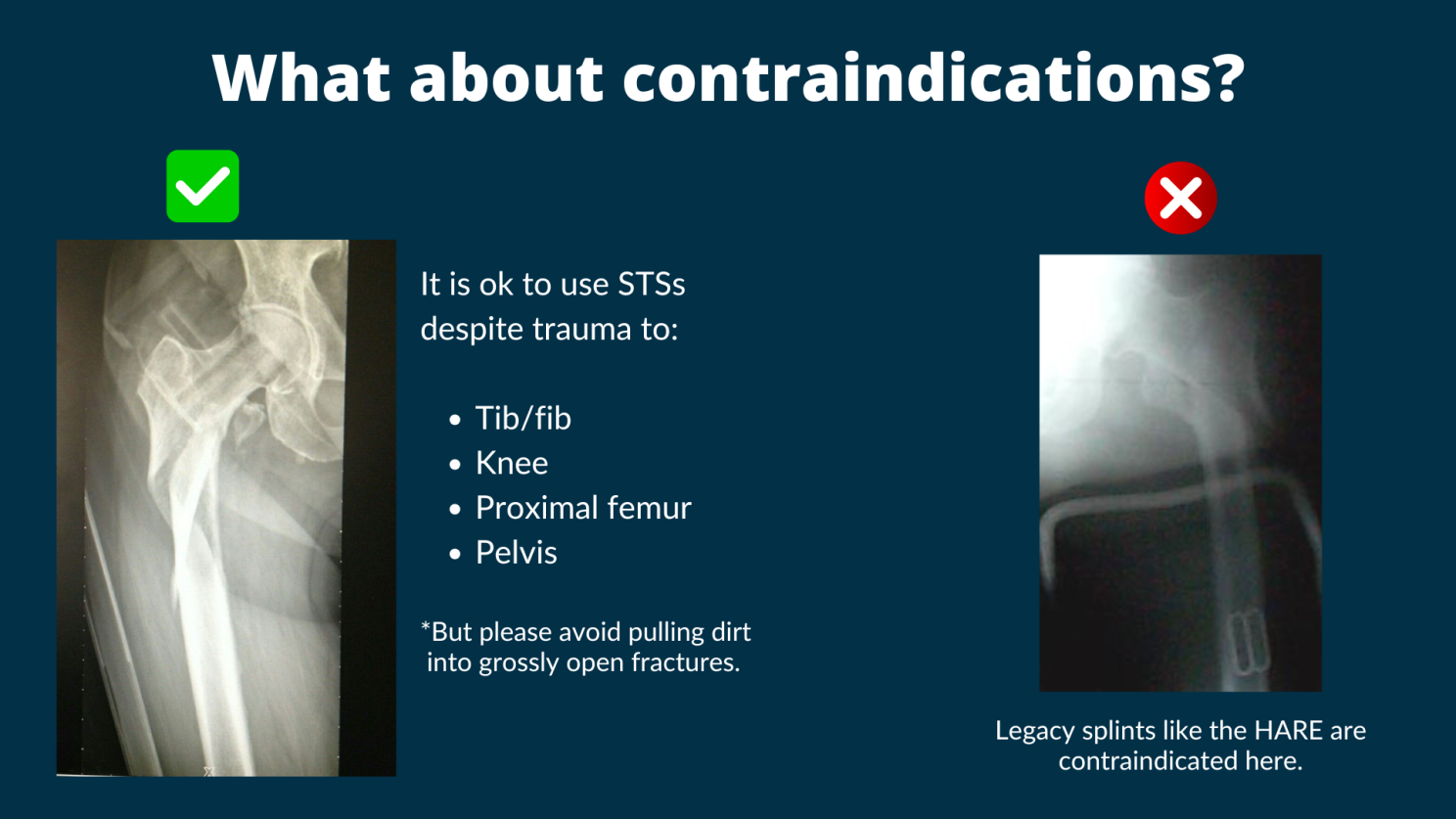
5. No Contraindication for Proximal Femur Fractures
The Hare’s rigid bar creates a fulcrum risk. The Slishman is a splint first that happens to provide traction.
6. Radiolucent
Leave it on through X-ray, CT, and into the OR. Only tiny spring buttons appear; the femur fracture view stays clear.
7. Superior Patient Comfort
No uncomfortable bar under the thigh. Patients report immediate relief and you avoid extra manipulation in the trauma bay.
8. Works Despite Concurrent Lower Extremity Trauma
Ankle laceration, open fracture, amputation, or sprain? The Hare needs a functional ankle hitch. The Slishman does not.
9. One Size Fits All — Adult and Pediatric
From a 5-year-old to a 7-foot patient — one splint. Eliminate stocking and training on separate pediatric Hare versions.
10. Compatible with Pelvic Binders
Crushed pelvis + femur fracture? Apply the pelvic binder first (life-threat #1), then apply the STS.
11. Traction from the Hip — Patient-Adjustable
You can pull traction with the patient until maximum comfort. Easy to adjust traction during long transports.
12. Zero Loose Parts
No ankle hitches or ratchets to lose on scene or in the rig.
13. Simplified Training for EMS & Fire Departments
Fewer components = faster, more consistent training and zero missing parts during high-stress calls.
14. Multi-Tool Versatility
The included pressure wrap doubles for bleeding control. Low-profile design allows easy neurovascular checks, log-rolls, and exams.
Watch the Original 2022 Demonstration Video (still 100% relevant):
Why the Evidence Gap Exists
Sometimes superiority is so obvious that large comparative trials are never funded. As I wrote in my October 2025 response to the NAEMSP position statement on femoral shaft fractures: “If medics were empowered to apply traction more liberally, using modern devices with fewer limitations, we might eventually be able to collect enough data…” Modern EMS traction splints like the Slishman line are smaller, lighter, faster, and kinder, exactly what today’s prehospital care demands.
Fire departments, ambulance services, and special operations teams nationwide have already upgraded. If your agency is still training recruits on the Hare traction splint, it’s time to update protocols and equipment.
By Dr. Sam Slishman Inventor of the Slishman Traction Splint | Board-Certified Emergency Physician